




Summary:
This guide traces how Narasu’s Coffee, one of India’s most established heritage brands, delivers consistent, export-grade coffee to buyers across the world, and what sets its process apart from the rest.
Introduction:
India exports over 400,000 metric tonnes of coffee annually, yet very few buyers outside the country know the story behind the brands they source from. The best coffee exporters in India are not just logistics operators. They are producers with decades of quality discipline, regional expertise, and a deep understanding of what international buyers actually need.
Narasu’s Coffee is one such producer. Established in 1926 and rooted in Salem, Tamil Nadu, Narasu’s has built an export operation that reflects the same standards it has maintained in the domestic market for nearly a century. In this blog, you’ll trace exactly how Narasu’s coffee travels from South Indian farms to coffee lovers across the world.
How Does Narasu’s Coffee Actually Reach International Buyers?
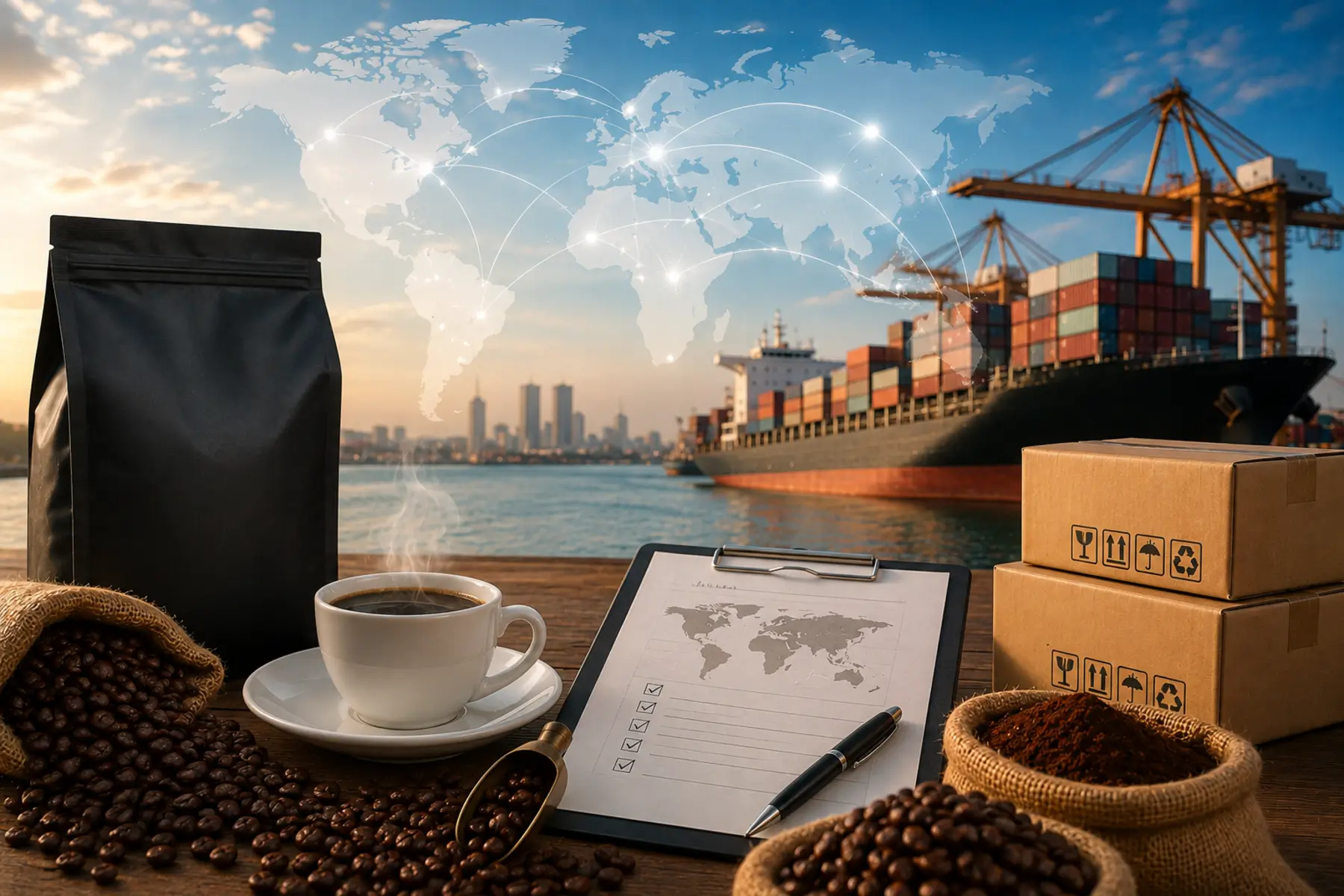
Narasu’s reaches global buyers through a structured export process that begins at sourcing, moves through rigorous quality control, and ends with shipment through established Indian port infrastructure. Every stage is designed to protect consistency, which is the one thing international buyers cannot afford to compromise on.
This process did not happen overnight. It was built over generations of refining what works, cutting what doesn’t, and staying close to the raw material at every step. That operational depth is precisely what separates heritage producers from newer entrants in the Indian coffee export market.
Where Does the Coffee Come From Before It Reaches Export Stage?
Narasu’s sources its beans from the established coffee-growing belts of South India, particularly the shade-grown estates of the Western Ghats. These regions produce Arabica and Robusta varieties with a distinctly low-acid, full-bodied profile that holds up well across different brewing methods, which matters enormously for buyers serving diverse consumer markets.
The sourcing relationships Narasu’s maintains are long-standing. According to coffee trade experts, consistent farm relationships are one of the strongest indicators of supply chain reliability because they reduce the variability that comes from switching sources batch to batch. For international buyers, this means the coffee they receive in their third shipment tastes the same as the first.
You can read more about the specifics of how the coffee export process works step by step on the Narasu’s Exports blog.
What Quality Standards Does Narasu’s Apply Before Exporting?
Every export batch from Narasu’s goes through a multi-point quality review covering moisture content, bean density, defect ratios, and cup quality. This is not a checkbox exercise. The internal benchmarks Narasu’s applies to export-grade coffee are the same ones that have defined its South Indian filter coffee reputation for nearly a hundred years.
Industry research consistently shows that batch-to-batch inconsistency is the single most common complaint among bulk coffee buyers globally. Narasu’s addresses this directly by applying structured grading at the post-processing stage and again before packaging. Trained tasters cup samples from each lot to verify flavor alignment before anything moves toward shipment.
For buyers sourcing Indian coffee at scale, this level of internal accountability is exactly the kind of assurance that reduces risk on their end. Explore Narasu’s quality and certification standards to understand what goes into every shipment.
How Does Narasu’s Handle the Logistics of International Shipping?
Once quality is confirmed, packaging is selected based on shipment volume, climate exposure during transit, and the shelf-life requirements of the destination market. Narasu’s offers configurations ranging from vacuum-sealed formats to bulk packaging suited for container loads, depending on what the buyer needs.
Shipments move through Indian ports with strong coffee-export infrastructure, where documentation, customs clearance, and freight coordination are handled as part of the standard export workflow. The paperwork side, including certificates of origin, phytosanitary certificates, and quality documentation, is prepared in line with the destination country’s import regulations, reducing the risk of customs delays that cost buyers real time and money.
Conclusion
Narasu’s journey from a Salem-based roastery to a trusted name among the best coffee exporters in India is built on one consistent principle: quality that doesn’t change depending on who the buyer is.
From sourcing relationships with South Indian estates to structured quality control and reliable shipping logistics, every part of the process reflects the same standards Narasu’s has applied domestically for generations. For international buyers ready to source Indian coffee with confidence, the first step is a simple one. Reach out to Narasu’s Exports and start the conversation about what your supply chain needs.
Answers For You.
Frequently Asked Questions.
-
Is Narasu's Coffee available for international bulk orders?Yes. Narasu's Exports supplies international buyers with export-grade coffee across multiple formats, including instant coffee, roast and ground, and concentrated extract, with packaging customized to shipment requirements and destination regulations.
-
What makes Narasu's different from other Indian coffee exporters?Narasu's combines nearly a century of roasting heritage with structured export-grade quality control, giving international buyers the consistency and traceability that shorter-tenured exporters often cannot guarantee across multiple shipments.
-
Which coffee varieties does Narasu's export?Narasu's exports both Arabica and Robusta varieties, along with chicory blends and custom formulations, sourced from South India's established coffee-growing regions in the Western Ghats.
-
How can a buyer start the sourcing process with Narasu's?Buyers can connect directly through the Narasu's Exports contact page to discuss volume requirements, product specifications, and documentation needs before placing an order.