




Summary:
Wondering whether Arabica or Robusta suits your market better? This complete guide from Narasus Exports, one of the best coffee exporters in India since 1926, breaks down both beans across taste, strength, price, and global demand to help importers and distributors make the right sourcing decision.
Introduction
Here’s what most coffee importers get wrong: they choose between Arabica and Robusta based on taste alone. The real decision involves your target market, your price point, your end consumer’s brewing habits, and your supply chain requirements. As one of the best coffee exporters in India with over a hundred years of sourcing and blending expertise, Narasu’s Exports has supplied both bean types to buyers across 45 countries. The right choice between Arabica and Robusta depends entirely on who you’re selling to and what experience you want to deliver. This guide breaks down exactly how both beans differ and which one belongs in your export portfolio.
What Is the Core Difference Between Arabica and Robusta Coffee?
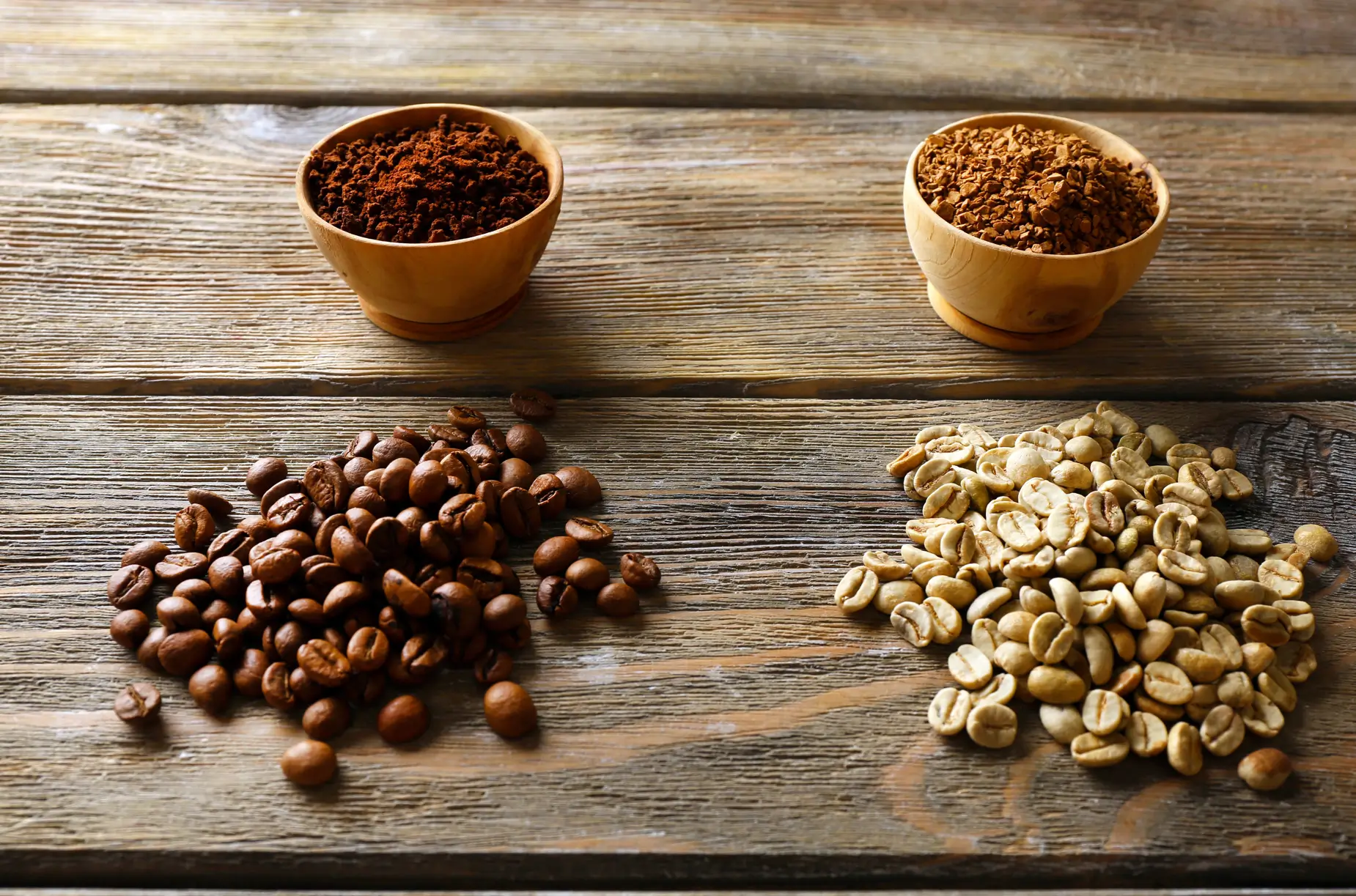
Arabica and Robusta differ fundamentally in growing conditions, flavor profile, caffeine content, and commercial value. Understanding these differences is the first step toward making the right sourcing decision for your market.
Arabica grows at altitudes between 600 and 2000 meters above sea level. It requires cooler temperatures, precise rainfall, and more careful cultivation than Robusta. The result is a bean with naturally lower caffeine, between 1.2% and 1.5% by weight according to the International Coffee Organization, and a flavor profile characterized by sweetness, fruit, floral notes, and a clean, bright finish.
Robusta thrives at lower altitudes in warmer, more humid conditions. It grows faster, yields more per hectare, and resists disease better than Arabica. The trade-off is a bolder, earthier flavor with significantly higher caffeine, between 2.2% and 2.7% by weight. That nearly double caffeine concentration is why Robusta delivers the intense, thick-bodied decoction that South Indian filter coffee and Italian espresso markets have built their traditions around.
According to the Indian Coffee Board, India produces approximately 60% Robusta and 40% Arabica by volume, making it one of the few countries in the world that commercially grows both species at scale. This positions Indian coffee exporters like Narasus uniquely to serve diverse global markets with authentic supply of both bean types from a single trusted partner.
How Does the Arabica vs Robusta Choice Affect Your Export Strategy?
Your bean choice directly shapes your pricing, target market positioning, and product development possibilities. Getting this decision right from the start saves significant time and cost downstream.
Robusta-forward blends serve volume-driven markets effectively. European espresso markets, particularly Italy, Germany, and Eastern Europe, have historically preferred Robusta-heavy blends because Robusta produces the thick crema, intense body, and high caffeine that traditional espresso culture demands. Middle Eastern markets similarly prefer bold, strong coffee that holds its character through milk-heavy preparations. Narasus Exports supplies instant coffee and roast and ground coffee with chicory blends to buyers across these regions, leveraging Robusta’s natural suitability for these taste preferences.
Arabica opens premium market doors. Specialty retail buyers in North America, Australia, and parts of Asia pay significantly more per kilogram for high-quality Indian Arabica from certified estates. These buyers value traceability, tasting notes, and origin story as much as the physical quality of the bean. Indian Arabica from Coorg and Chikmagalur has earned international recognition for its unique flavor profile, giving exporters a genuine differentiation story to bring to premium market conversations.
And here’s the thing: the most commercially successful export portfolios don’t choose one over the other. They source both and blend strategically for each market’s requirements. Narasus Exports offers custom blend development that allows international buyers to specify their exact Arabica to Robusta ratio, roast level, and grind specification, removing the guesswork from market-specific product development entirely.
Which Bean Works Best for Instant Coffee Export Markets?
Robusta performs significantly better in instant coffee manufacturing, and the reason comes down to extraction yield and flavor retention through processing. Robusta produces a higher soluble solids yield during the extraction phase of instant coffee production, meaning you get more usable concentrate per kilogram of green beans. This translates directly into better cost efficiency at scale.
Robusta also retains its bold character through the high-temperature spray drying and agglomeration processes used in instant coffee manufacturing. Arabica’s delicate floral and fruity notes degrade more easily under heat stress, making pure Arabica instant coffee technically challenging to produce without flavor compromise. Most successful instant coffee products for volume markets therefore use Robusta as their foundation, often blending a small percentage of Arabica to add complexity and soften bitterness.
Narasus Exports produces instant pure coffee and instant chicory blends for international markets using precisely this approach. With 100 years of roasting and processing expertise and a monthly production capacity of 600 tonnes, their instant coffee range delivers the consistency and yield efficiency that volume buyers across 45 countries rely on for predictable supply chain performance.
Why Do Premium Markets Prefer Indian Arabica Over Other Origins?
Indian Arabica has earned a genuinely distinctive reputation in global specialty coffee markets, and the best coffee exporters in India have used this reputation strategically to access higher-value buyer relationships.
Indian Arabica grown in shade-covered estates across Karnataka develops under unique growing conditions that concentrate flavor compounds and produce a naturally complex cup with lower acidity than most African or Latin American Arabica origins. According to the Specialty Coffee Association, Indian Arabica from certified estates regularly achieves scores above 85 on their 100-point quality scale, qualifying for specialty grade designation.
Monsooned Malabar Arabica takes this distinctiveness further. The traditional process of exposing green coffee beans to monsoon winds and moisture along India’s Malabar coast produces a uniquely low-acid, full-bodied bean with earthy and woody notes that no other country replicates. For specialty importers looking to differentiate their product range with authentic origin stories, Monsooned Malabar is a genuinely compelling option that commands premium pricing in mature coffee markets.
For export buyers exploring Indian Arabica sourcing, Narasus Exports’ quality and certifications page details their compliance with FSSC 22000, ISO 9001, ISO 22000, Halal, Star-K Kosher, RA Certified, FDA, GACC, and FSSAI standards. This certification stack removes compliance friction for buyers across diverse regulatory environments, from European food safety requirements to Middle Eastern Halal specifications.
How Should You Choose Between Arabica and Robusta for Your Market?
Choosing the right bean for your market requires honest answers to five questions. What caffeine strength does your end consumer expect? What brewing method do they use? What price point does your market support? What flavor profile do your retail or foodservice buyers specify? And what volume consistency does your supply chain require?
If your market expects a bold, intense cup that holds its character through milk, or if you’re supplying instant coffee for volume retail, Robusta-dominant sourcing serves you best. Markets across South Asia, the Middle East, Africa, and Southern Europe fall into this category, and they represent the largest volume opportunity for Indian coffee exporters.
If your market pays premium for origin-specific, low-acid, complex flavor profiles, Indian Arabica delivers a genuine competitive advantage over commodity Arabica from other regions. Specialty retail, premium hospitality, and private label brands targeting health-conscious or quality-driven consumers in North America, Australia, and Northeast Asia represent the highest-margin opportunity for Arabica-focused sourcing.
For most commercial buyers, the smartest approach is a blended portfolio. Source Robusta as your volume foundation and Arabica as your premium tier differentiator. Narasus Exports supports exactly this strategy through their exports page, where their team works directly with international buyers to develop market-specific product solutions backed by a century of manufacturing expertise and active trading relationships across 45 countries.
Conclusion
The Arabica vs Robusta decision shapes every aspect of your coffee export strategy, from pricing and positioning to manufacturing efficiency and market fit. Neither bean is universally superior. Robusta delivers volume, boldness, and cost efficiency for mass market and instant coffee applications. Arabica unlocks premium pricing, specialty positioning, and origin-driven differentiation for buyers targeting quality-conscious consumers.
As one of the best coffee exporters in India, Narasus Exports brings a hundred years of expertise in sourcing, blending, and supplying both bean types to international buyers across 45 countries. Whether you need bulk Robusta for instant coffee manufacturing, premium Arabica for specialty retail, or a custom blend for your private label range, their fully integrated facility handles every requirement from green bean to final pack.
Answers For You.
Frequently Asked Questions.
-
Who is the largest exporter of coffee in India?India's top coffee exporters include CCL Products India Ltd, Vayhan Coffee Limited, Nestle India Limited, Coffee Day Global Limited and Allanasons Private Limited. Among heritage manufacturers, Narasu's Exports, founded in 1926, stands as one of India's oldest and most respected coffee export companies with active supply partnerships across 45 countries.
-
Which countries import coffee from India?Italy, Germany, Russia, Belgium and Jordan are the prime buyers for coffee exporters in India. Beyond these markets, Indian coffee reaches buyers across the Middle East, Asia, Africa, the Americas and Australia, driven by growing demand for both instant and specialty coffee formats.
-
What certifications are required to export coffee from India?FSSAI registration constitutes the mandatory baseline for all Indian food exports. ISO 22000 certification demonstrates comprehensive food safety management. For specialty markets, Rainforest Alliance, Organic India and Fair Trade certifications provide additional quality assurance and marketability. Narasu's Exports holds all these certifications plus FSSC 22000, Halal, Kosher, FDA and GACC approvals.
-
How do I verify a reliable coffee exporter in India?A reliable coffee exporter in India should demonstrate full in-house manufacturing rather than trading, hold internationally recognised certifications relevant to your destination market, provide transparent quality documentation and have a verifiable track record of consistent delivery across multiple shipments. Requesting a factory visit or audit report is the most effective verification step before committing to a supply agreement.